Everything All At Once, 2026
Lecture Theatre, Chelsea College of Arts, UAL, London.
Silicone, aluminium, AV, film.

Timeline of Millbank and Chelsea College of Arts 1799: Philosopher Jeremy Bentham acquired the swampy Pimlico site for his visionary 'Panopticon' prison. While his circular design was abandoned, a sprawling hexagonal fortress took its place. 1816: Despite structural challenges and ground instability, the penitentiary welcomed its first female captives in early summer. 1843: Millbank's role shifted to a transit hub for individuals sentenced to penal transportation in Australia after Pentonville became the primary national prison. 1853 – 1870: As transportations dwindled, the facility served as a local prison for women before housing military personnel. 1886: Inmate operations ended, and the keys were transferred to civil authorities. 1890: Plague and structural rot forced the permanent closure and subsequent teardown of the complex. Present Day Context Tate Britain: Founded in 1897 as the National Gallery of British Art, this world-class institution stands directly atop the former prison foundation. Millbank Estate: This pioneering social housing project was built at the turn of the century using brickwork recovered from the prison’s remains. Chelsea College of Arts: The contemporary art campus occupies the historic footprint of the former Royal Army Medical College. Traces of the past remain etched in the local geography, from the octagonal shape of the nearby streets to ancient stone bollards and subterranean cells preserved in local architecture.
Film, 12 min 16 secs
link to view the work via- UAL showcase website
‘Everything All At Once’ foregrounds the gruesome history that weighs on the contemporary moment, revealing how the history of execution, anatomy and art is intertwined and can be seen in the urban landscape and beyond. The project draws on archival material, historical research, literature, film and art to explore our understanding of power, punishment and the body, often revealing injustice and abjection. It also weaves in personal and community memory, along with contemporary media, to present a narrative often neglected in institutional histories.
While grounded in the past, the film demonstrates how traditional belief systems and hierarchies of power continue to shape our contemporary politics, technologies and society – even the history of representation – and urges viewers to make connections for the future.
The film’s narrative is grounded in my own experience of living in London, where layers of history are evident all around and sits somewhere between documentary, personal archive and work of art. It engages in knowledge-sharing as a form of artistic activism and seeks to challenge the belief systems that govern our present, and our future.




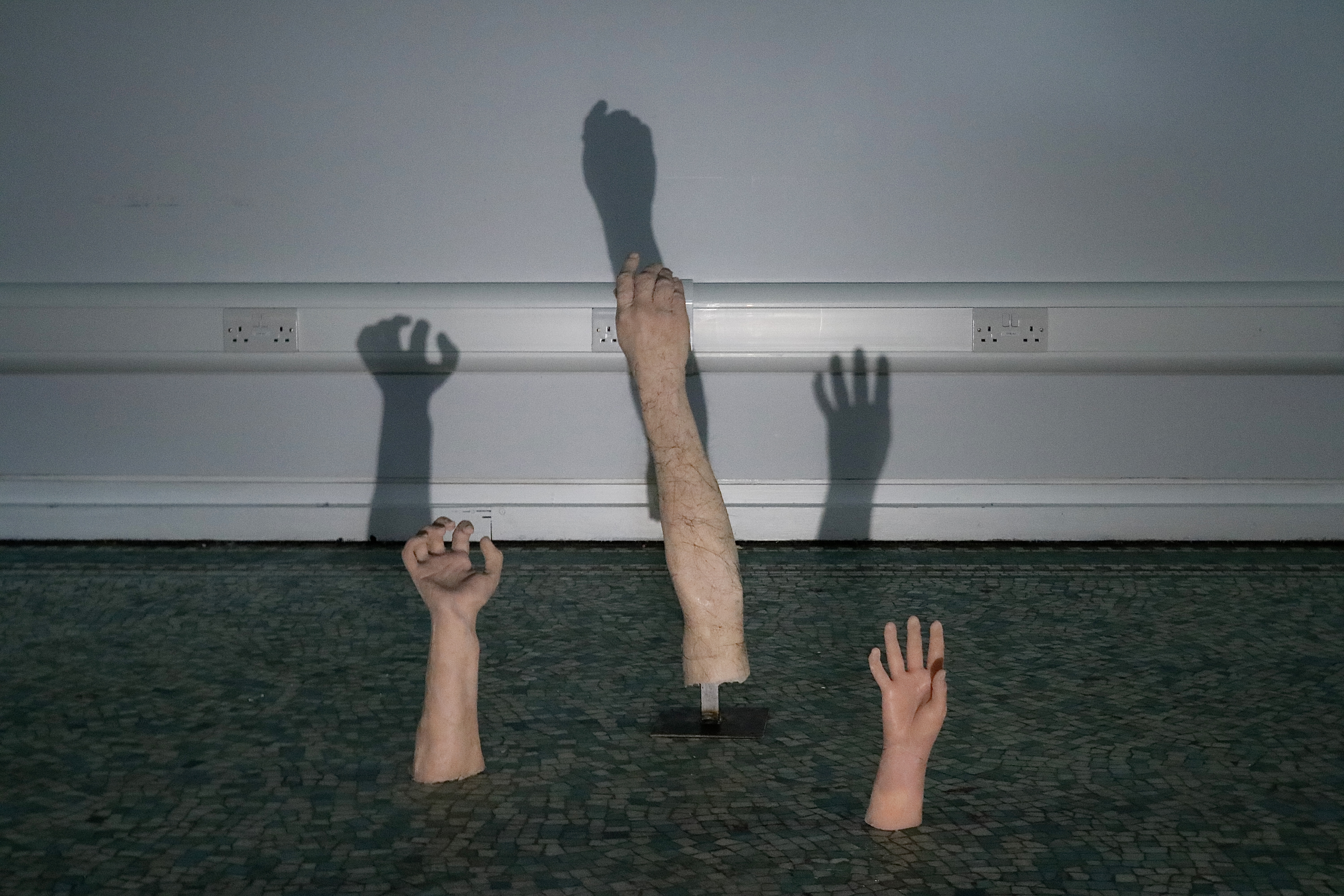
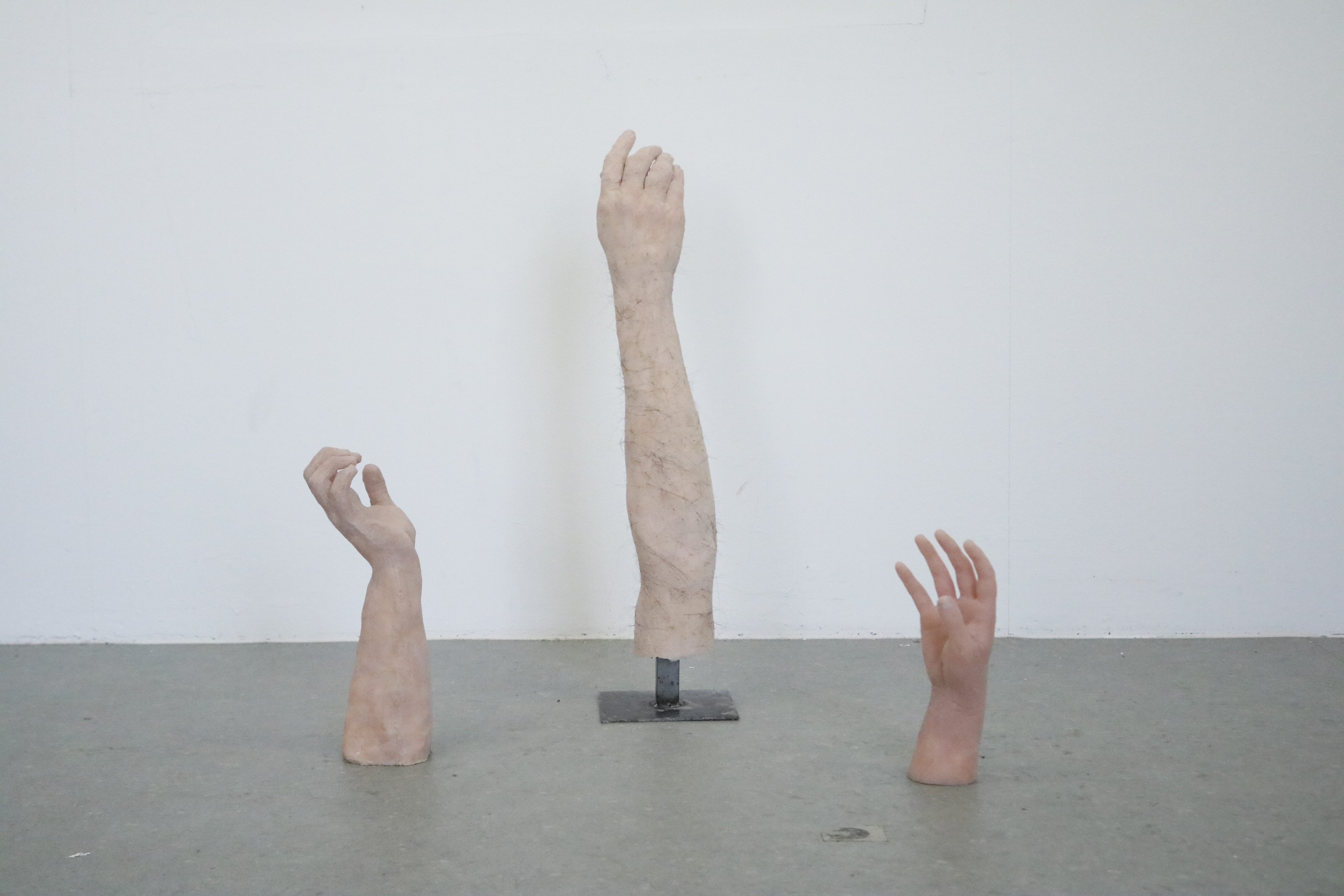
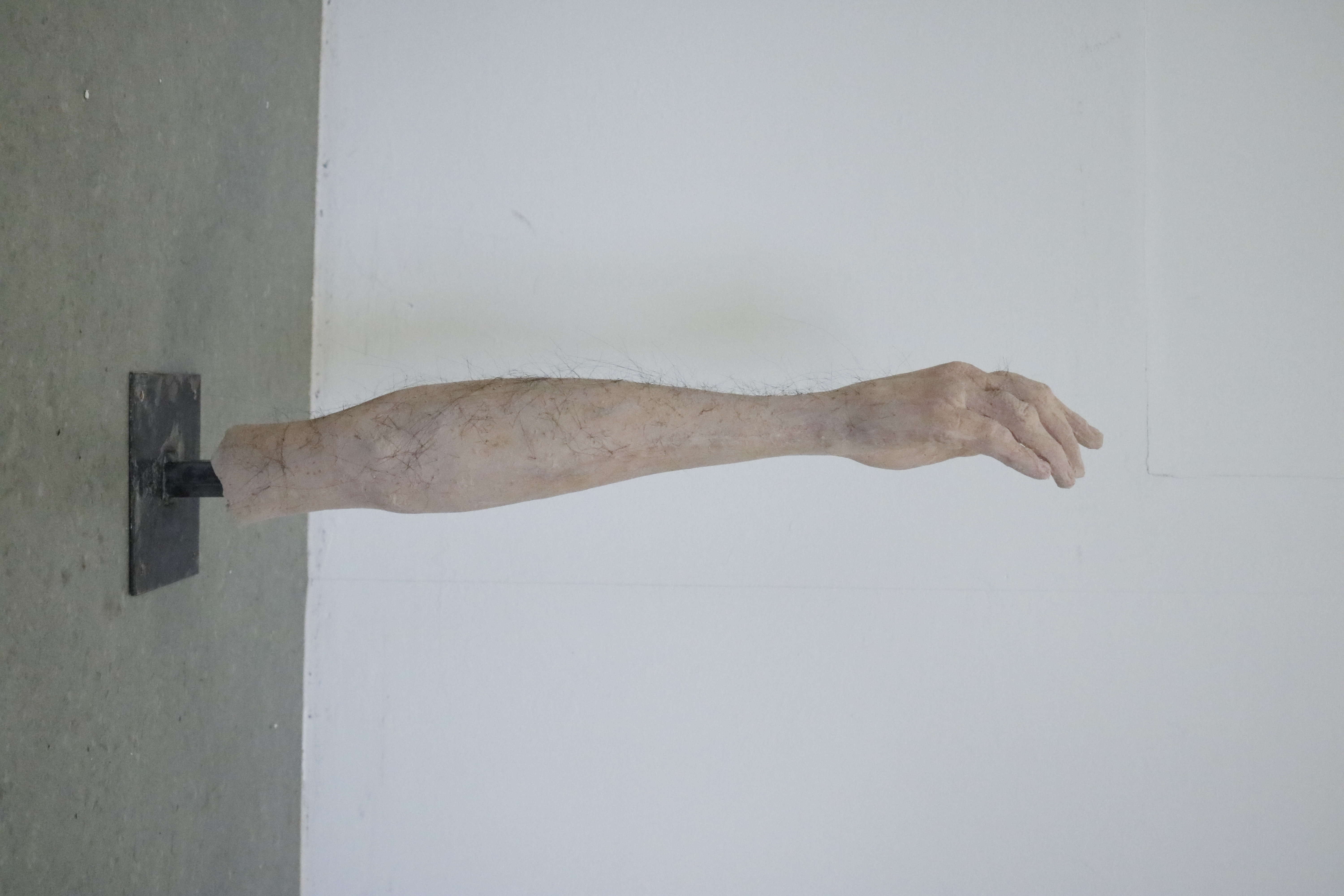
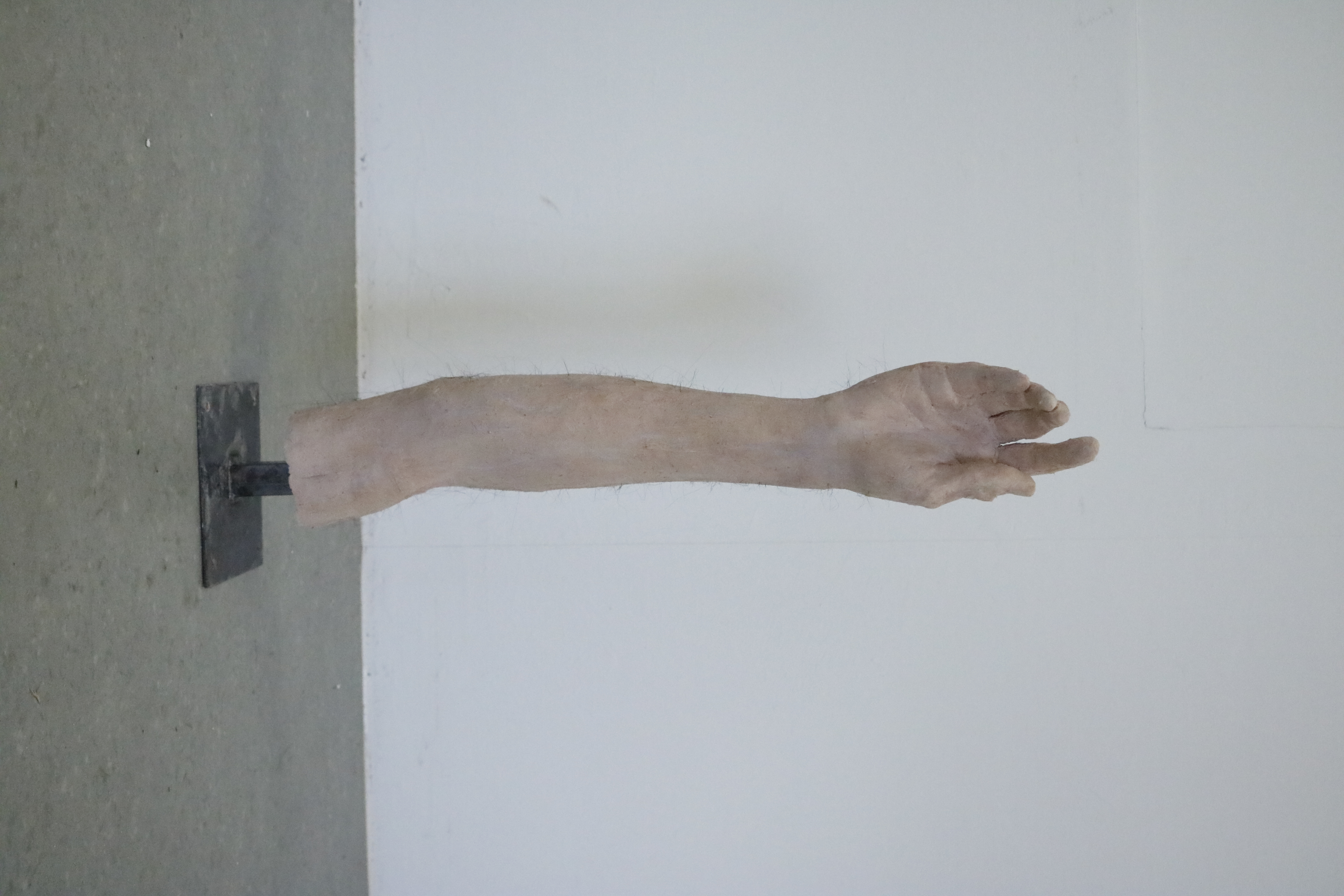
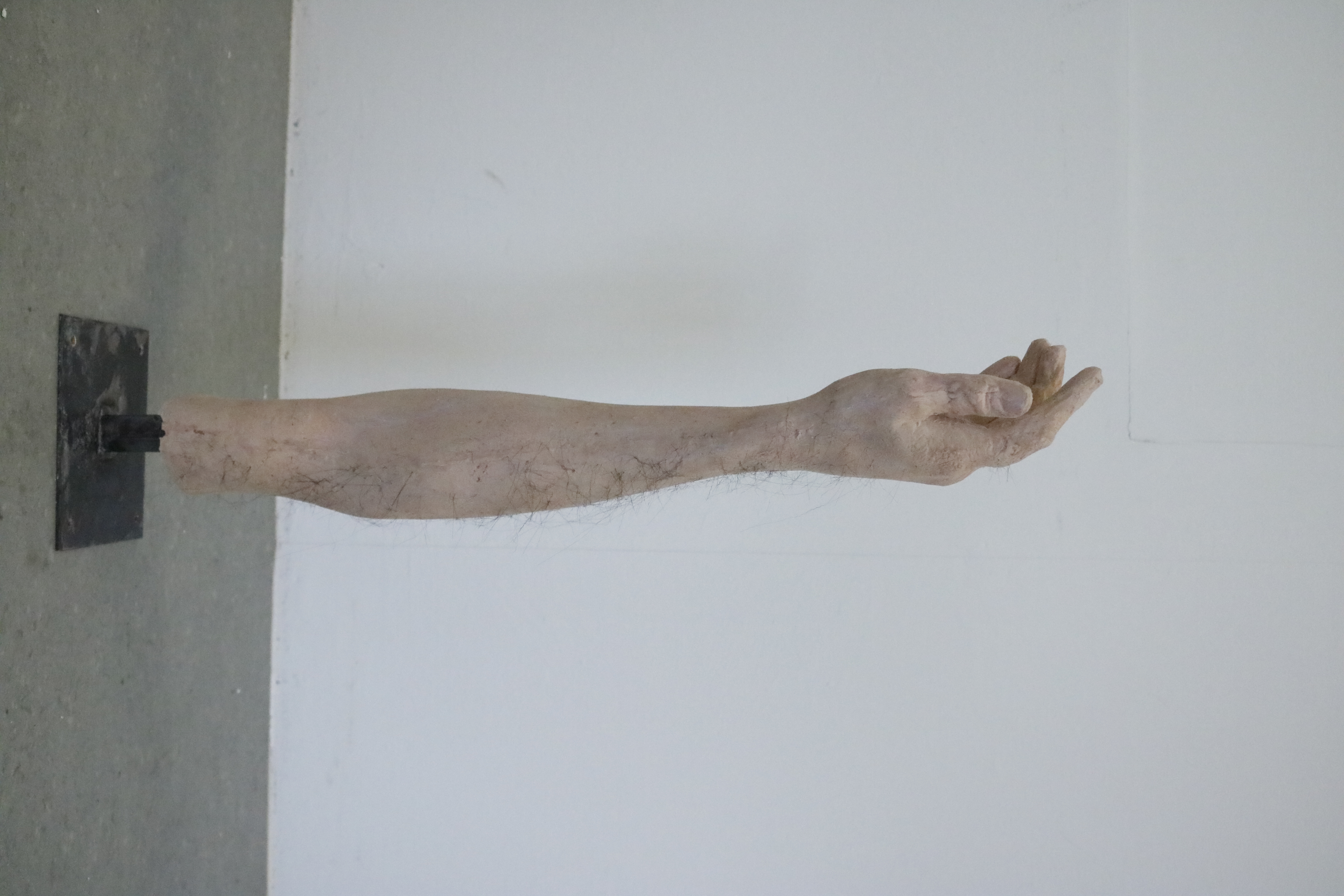
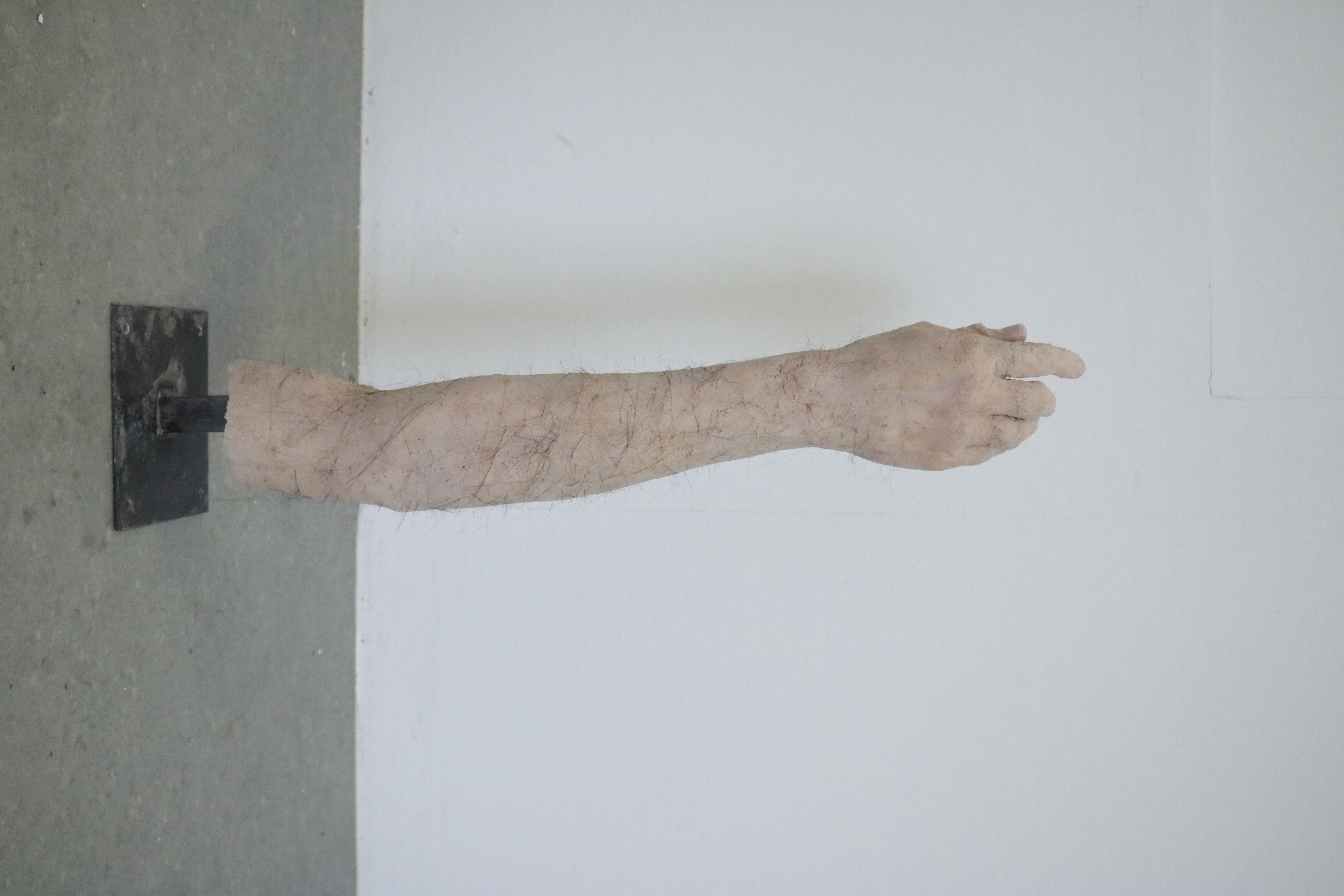
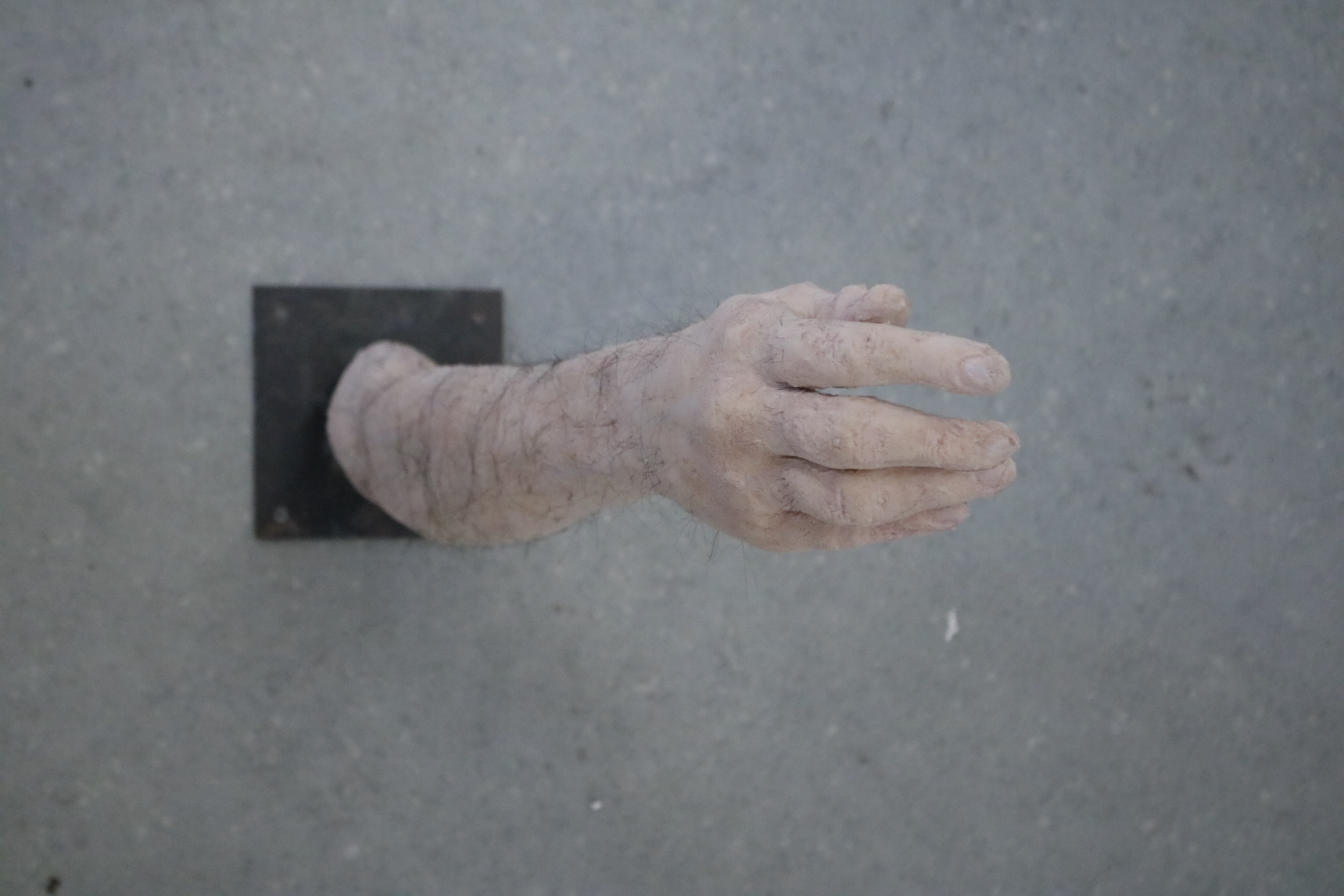
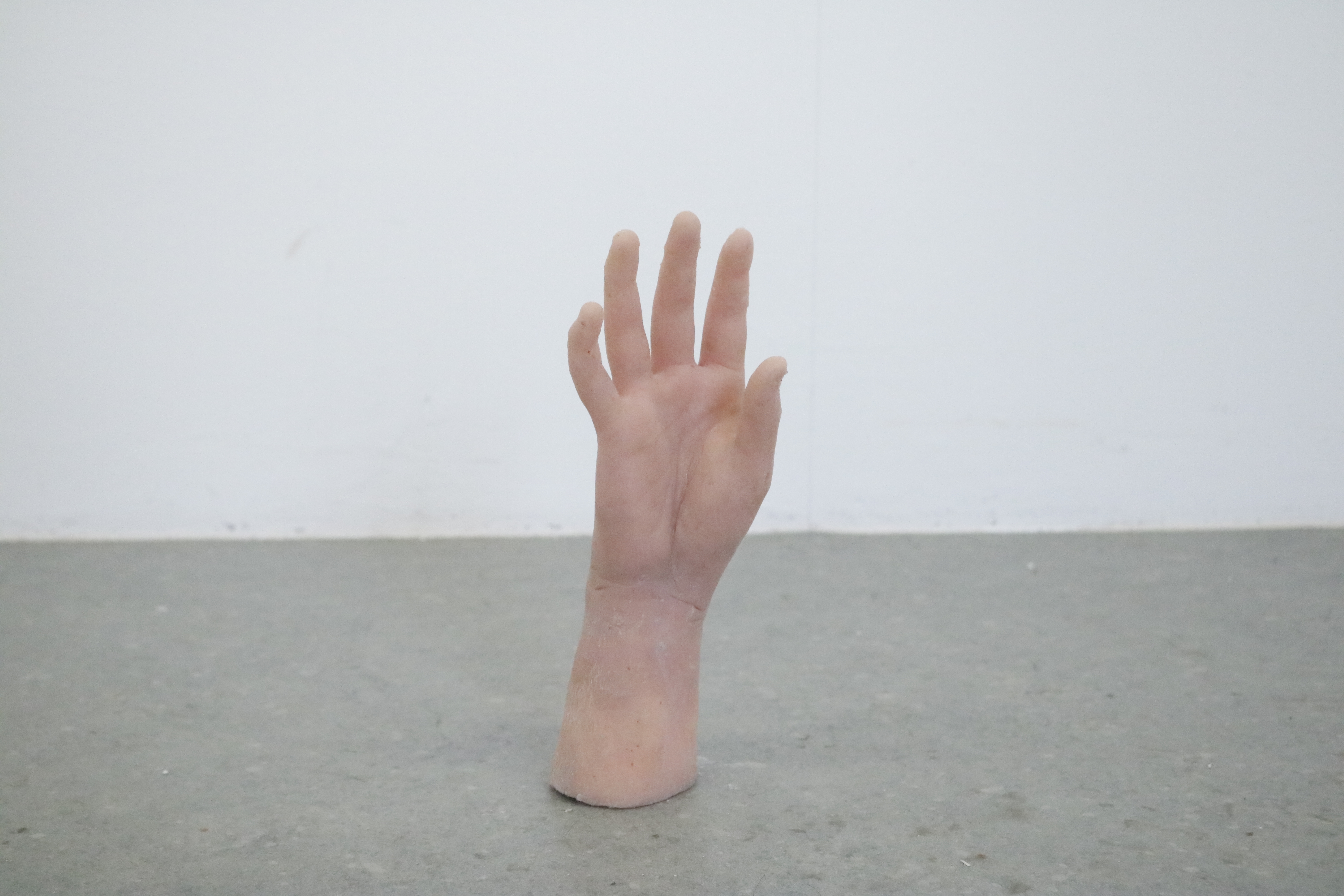
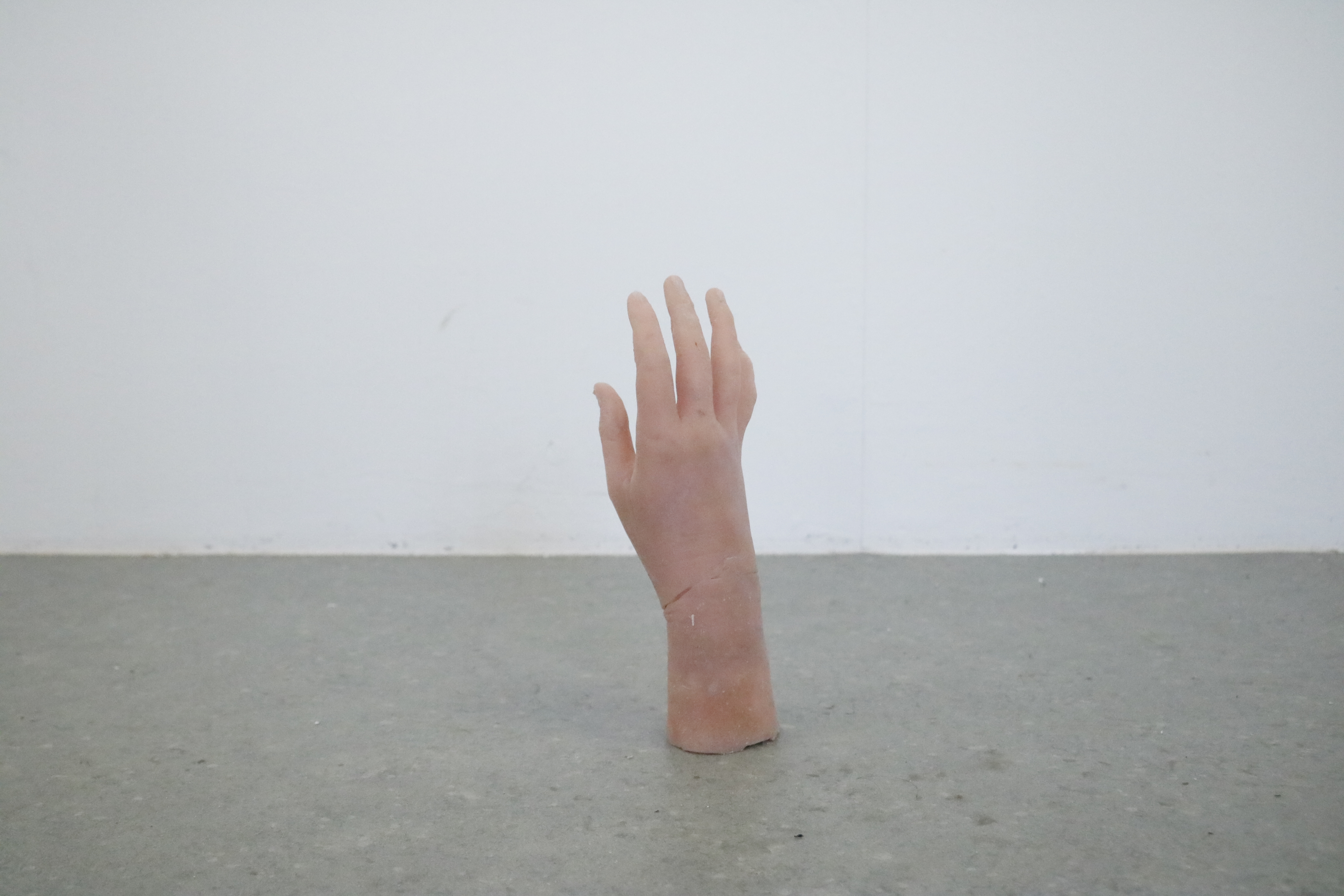
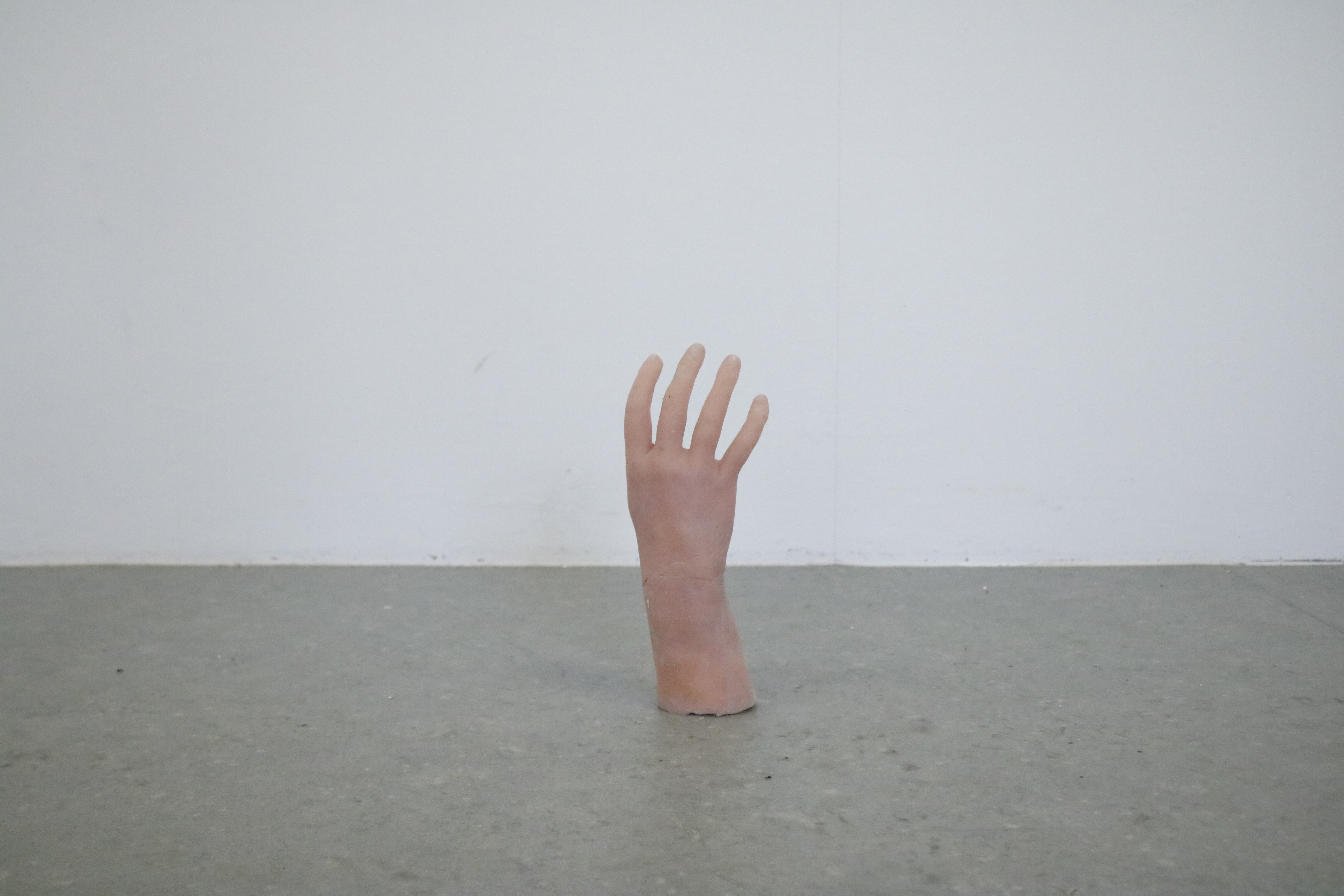
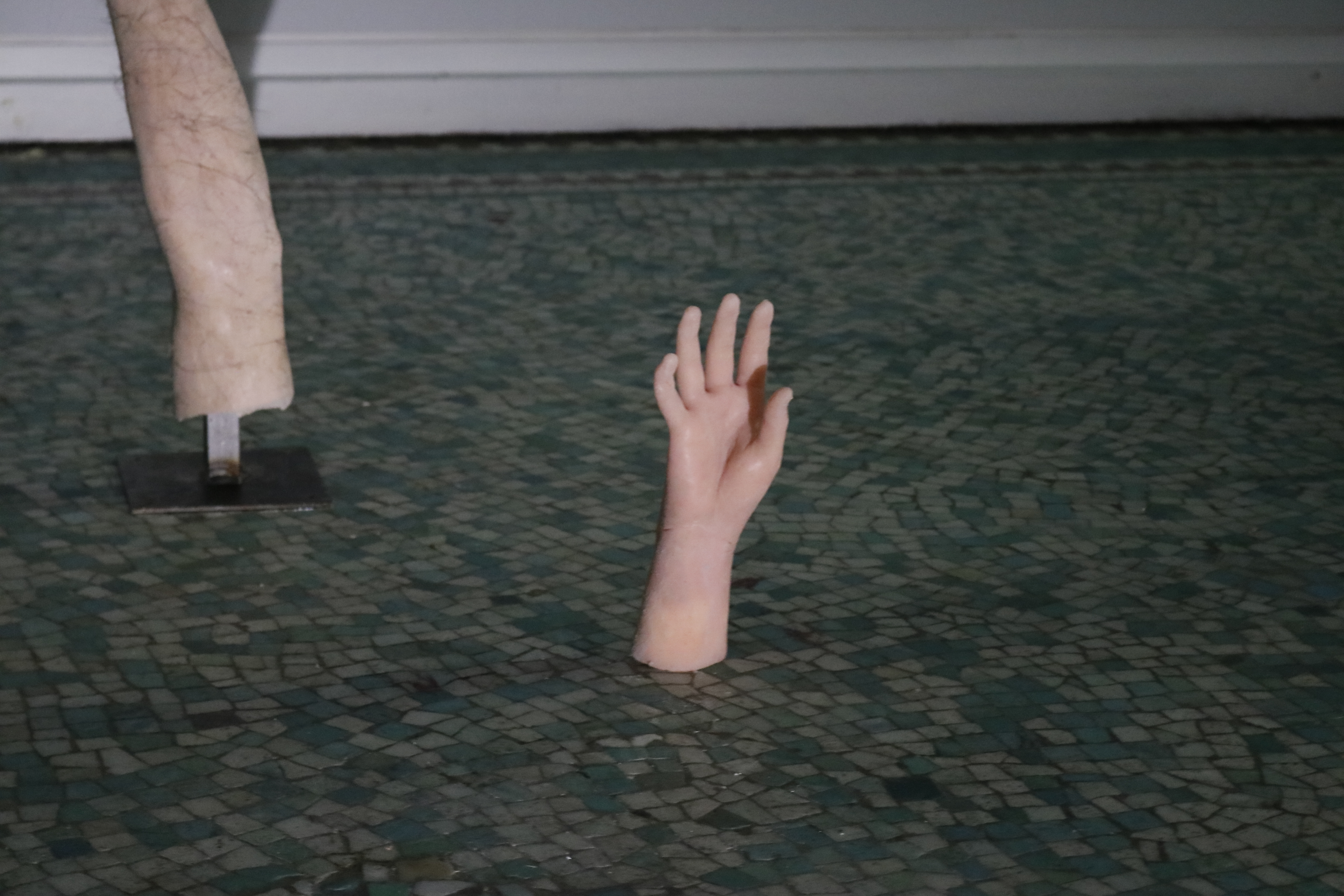
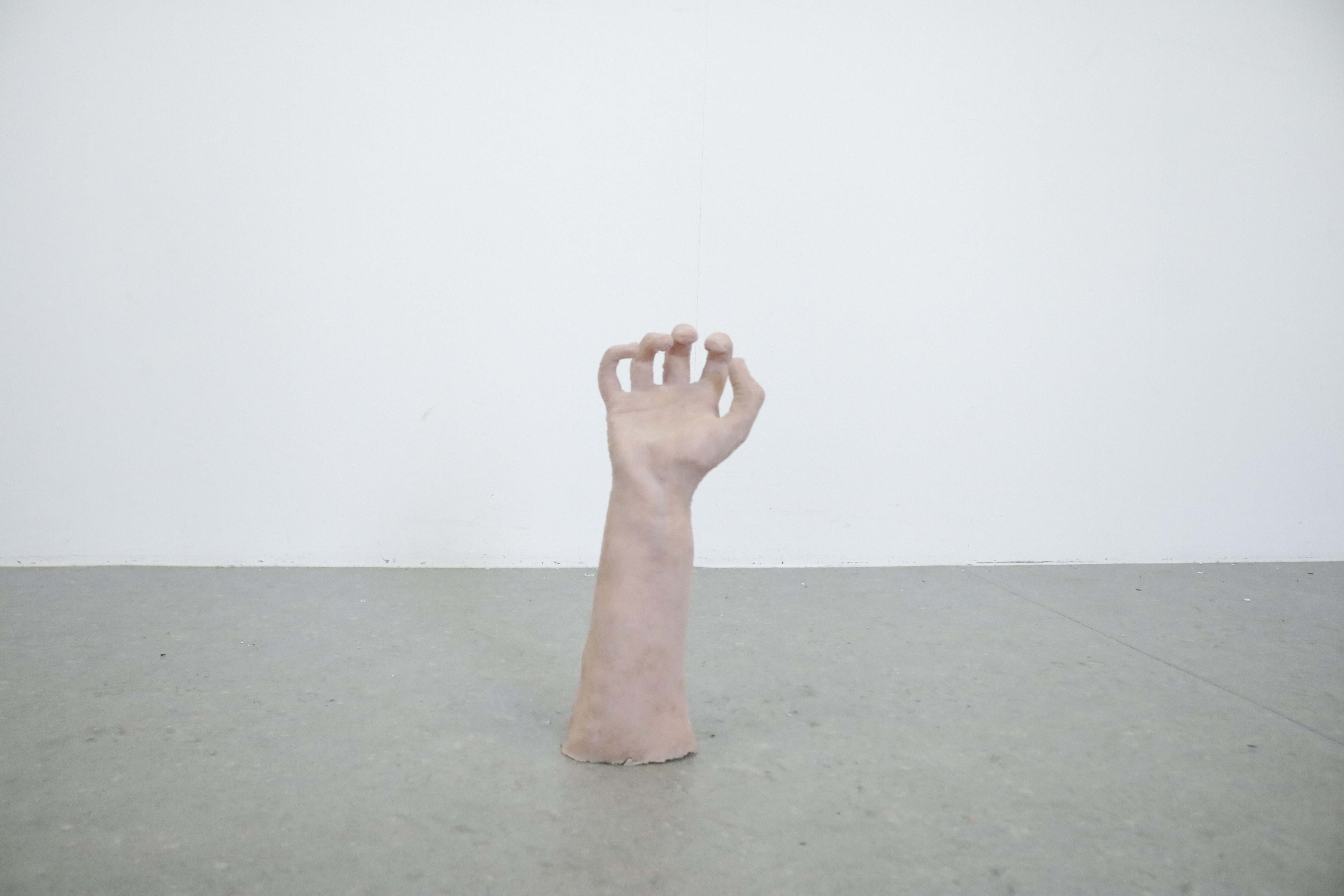
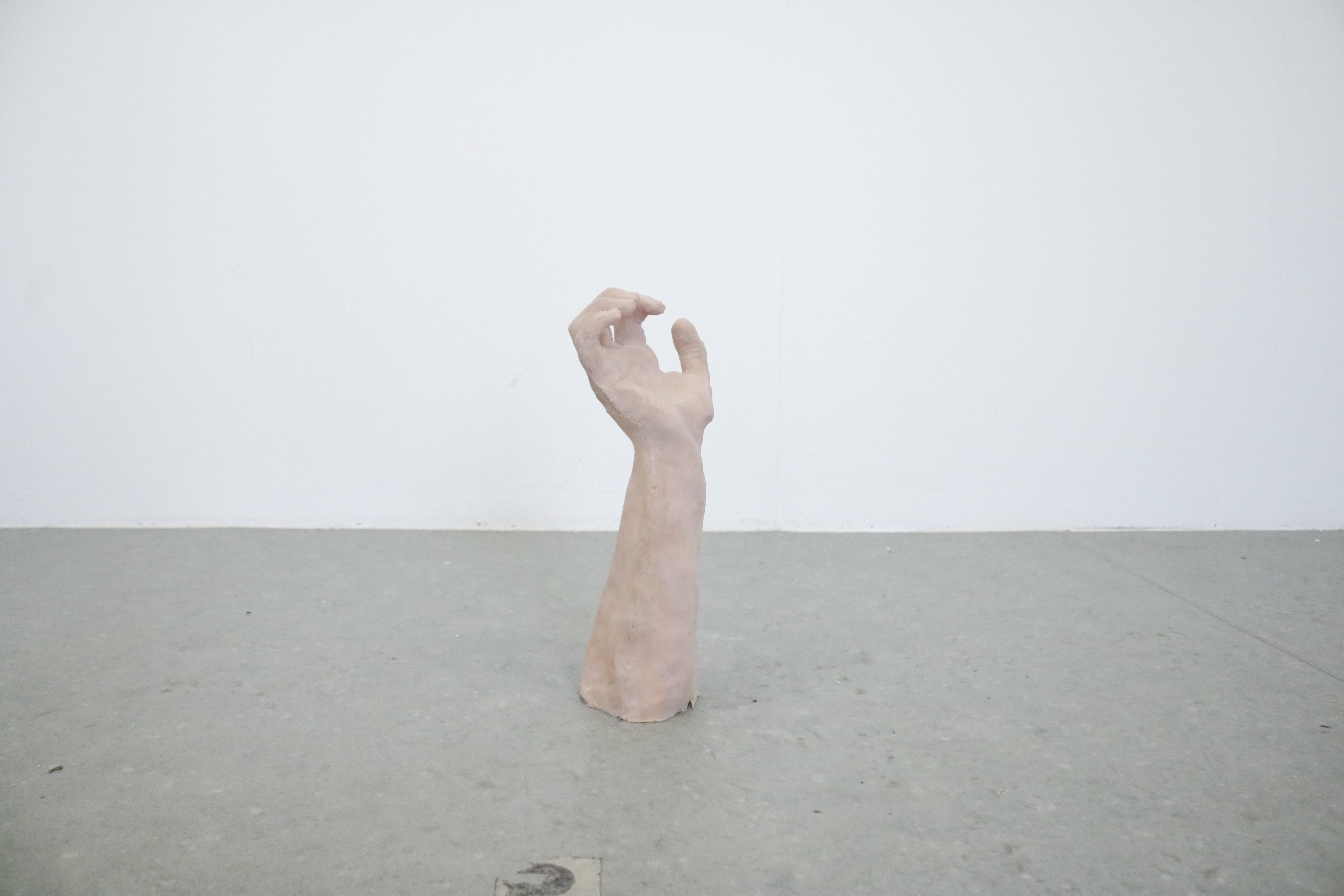
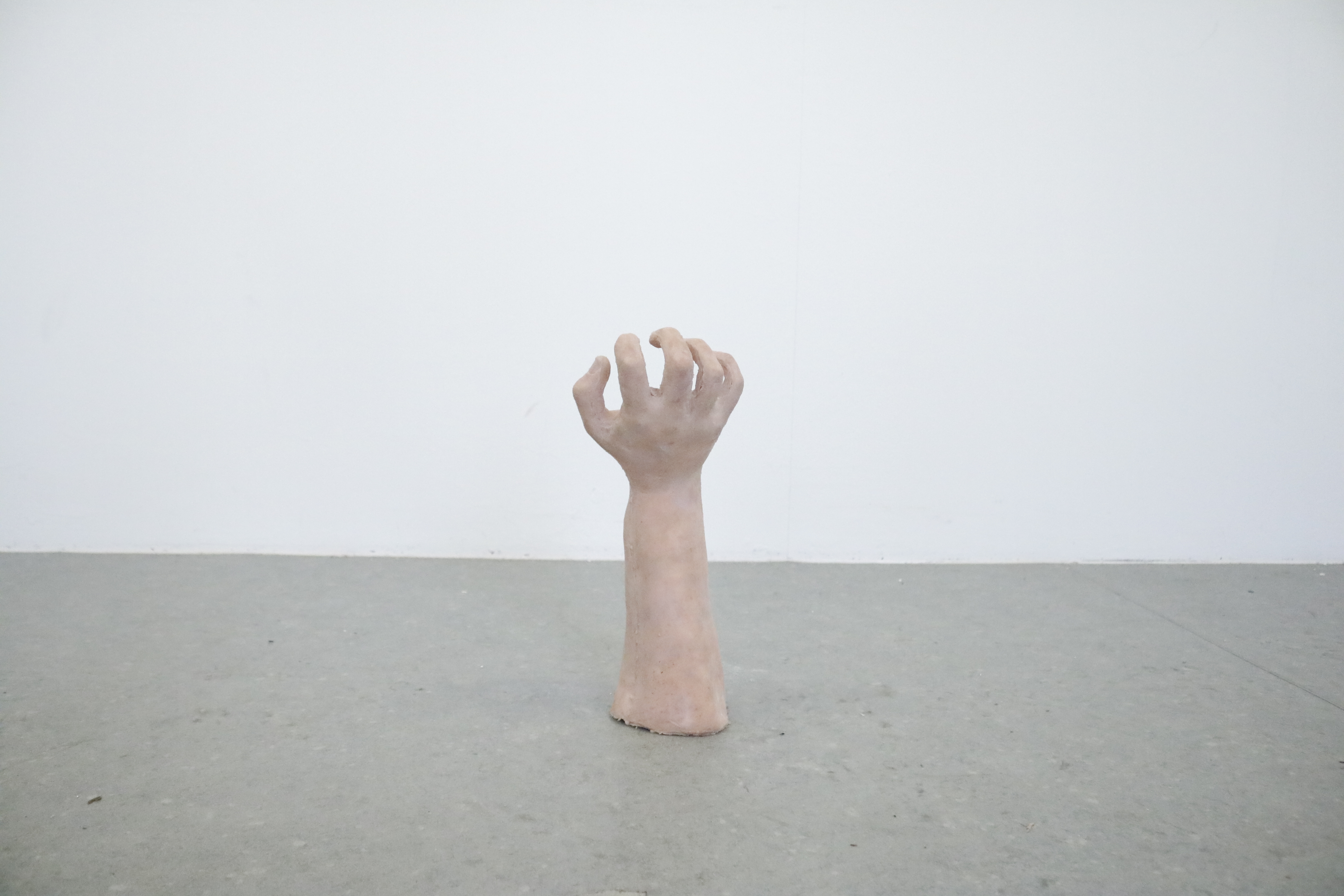
In Everything All At Once, the film work sits in the same room as three silicone hyper-realistic arms, and is in competition for the viewers attention with a backdrop of thunder and lightning, and the sound of a storm. Two of the arms extend directly out of the floor; reflecting Chelsea College's history as a Royal Army Medical College, and marking the junction between the college's old morgue, and the anatomy theatre (now lecture theatre), that is directly above. The third arm is elevated on a metal stand, skewered. Flashes of lightning come from above and from the back of the room, only invading the viewer's periphery occasionally and just for a second, as if playing a trick. It offers the magic of Frankenstein, and the suggestion of something happening out of sight; a reference to the 'unreal engine' operating across the threshold.


Installation view, 3 mins
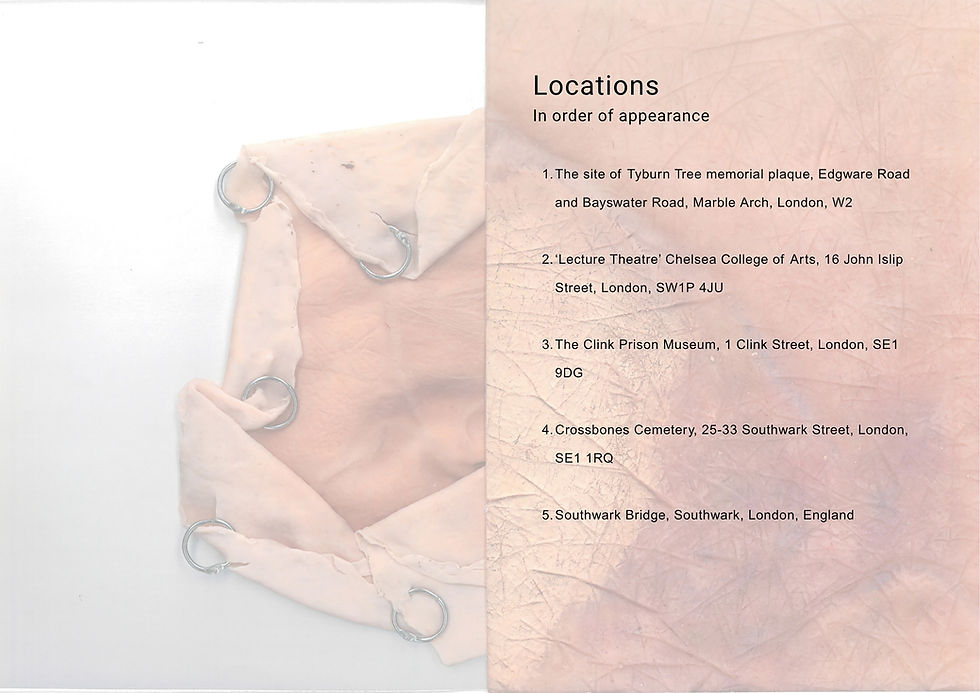
'Everything All At Once' Publication, 2026